Connect with your community through resources, events, and more

Resources

The resources below can provide further support for those living with thalassemia, with details on myAgios® Patient Support Services, treatments, financial support, and more.
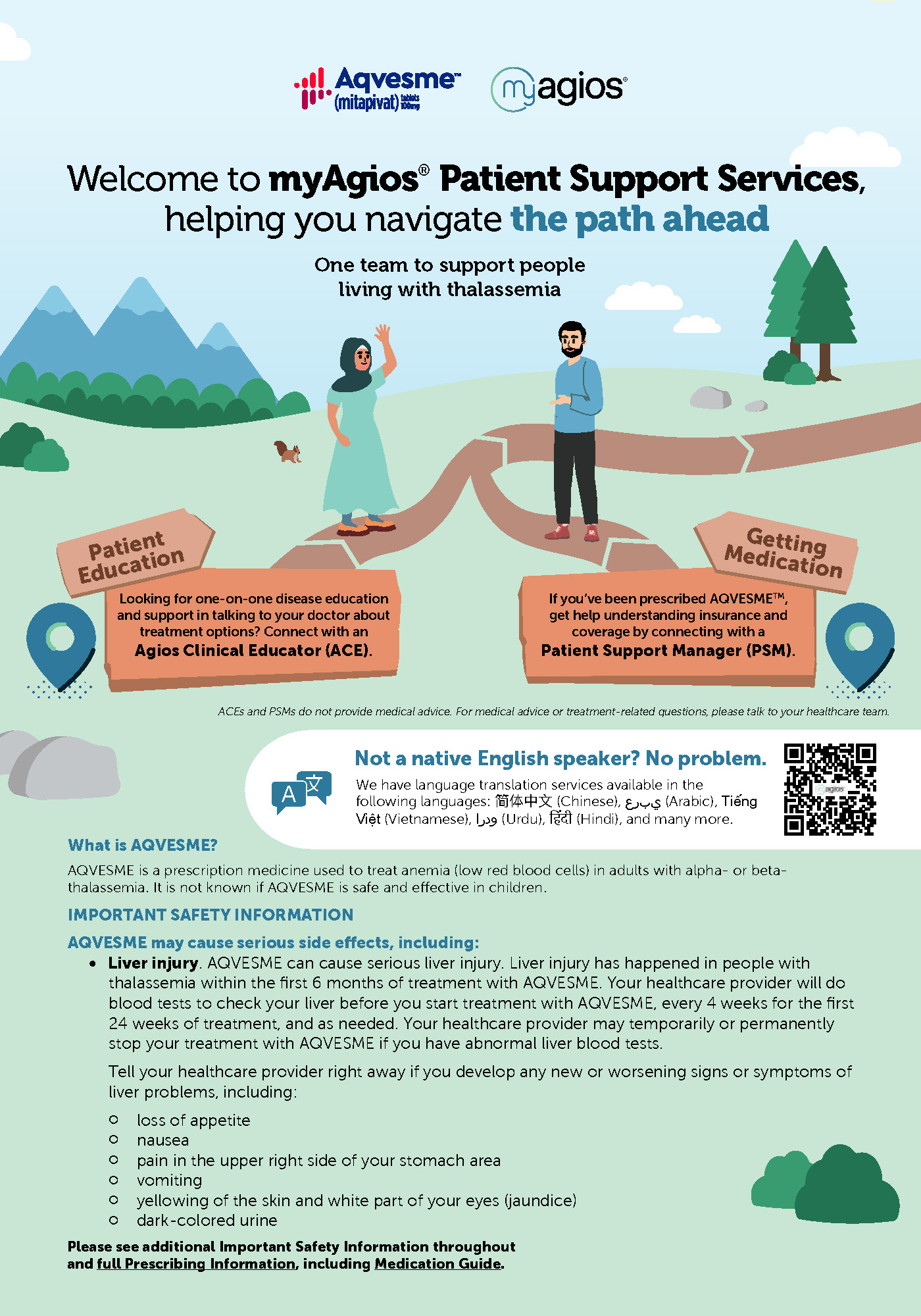
myAgios Patient Brochure

myAgios Patient Brochure

An overview of how myAgios provides support along the treatment path.
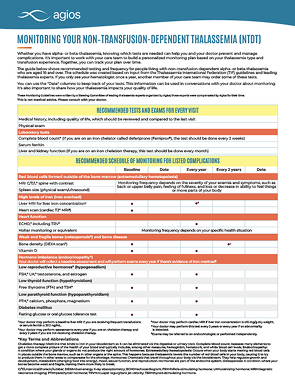
thalassemia Patient Brochure

Thalassemia Monitoring Guide

This guide can help you keep track of the recommended tests and follow-up assessments needed for people with thalassemia so health trends can be identified early on.

thalassemia Patient Testimonials

Thalassemia Patient Testimonials

What’s it like living with thalassemia? Watch real stories and hear from people living with thalassemia.
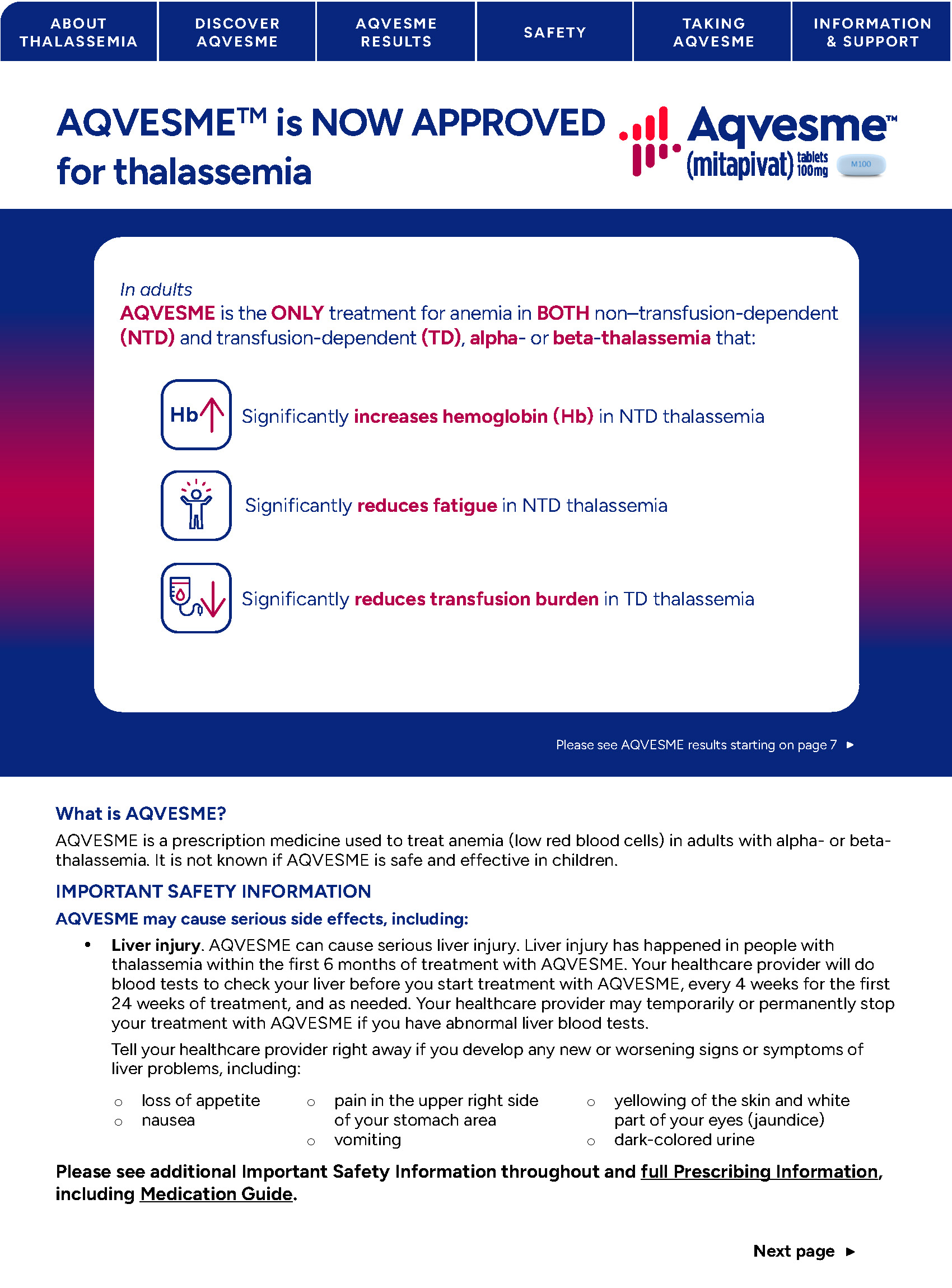
Aqvesme Patient Brochure

AQVESME Patient Brochure

Learn about AQVESME for adults with anemia in alpha- or beta-thalassemia, regardless of transfusion status.

Ask your myAgios team about more helpful resources:

Call us at 1-877-77-AGIOS (1-877-772-4467), Mon-Fri, 8 AM to 8 PM ET.

Language support is available.

Events

Register for a thalassemia educational program

Join our online and in-person events to hear from a thalassemia expert, listen to inspirational stories, and connect with others living with thalassemia.

Get social

Connect with the community on social media. Check out our Facebook and Instagram pages.

contact center

As you walk the path of managing your thalassemia, we walk alongside you, every step of the way.

Call us at 1-877-77-AGIOS (1-877-772-4467), Mon-Fri, 8 AM to 8 PM ET.

Language support is available.

IMPORTANT SAFETY
INFORMATION

AQVESME may cause serious side effects, including:

  • Liver injury. AQVESME can cause serious liver injury. Liver injury has happened in people with thalassemia within the first 6 months of treatment with AQVESME. Your healthcare provider will do blood tests to check your liver before you start treatment with AQVESME, every 4 weeks for the first 24 weeks of treatment, and as needed. Your healthcare provider may temporarily or permanently stop your treatment with AQVESME if you have abnormal liver blood tests.
    Tell your healthcare provider right away if you develop any new or worsening signs or symptoms of liver problems, including:
    • loss of appetite
    • nausea
    • pain in the upper right side of your stomach area
    • vomiting
    • yellowing of the skin and white part of your eyes (jaundice)
    • dark-colored urine

In clinical studies of AQVESME, 2 of 301 people (0.66%) treated with AQVESME experienced adverse reactions suggestive of liver injury. Three additional people experienced adverse reactions suggestive of liver injury during the open-label extension periods, after switching from placebo to AQVESME. Of the 5 people, two had serious liver injury requiring hospitalization, including 1 who developed jaundice. Another developed jaundice without requiring hospitalization. All 5 people discontinued treatment with AQVESME, and these reactions improved upon treatment discontinuation.

Because of the risk for liver injury, AQVESME is only available through a restricted access program called the AQVESME Risk Evaluation and Mitigation Strategy (REMS).

Before taking AQVESME, tell your healthcare provider about all of your medical conditions, including if you:

  • have liver problems, such as cirrhosis
  • are pregnant or plan to become pregnant. It is not known if AQVESME will harm your unborn baby. Tell your healthcare provider right away if you become pregnant or think that you are pregnant during treatment with AQVESME.
  • are breastfeeding or plan to breastfeed. It is not known if AQVESME passes into your breast milk. Talk to your healthcare provider about the best way to feed your baby during treatment with AQVESME.

Tell your healthcare provider about all the medicines that you take, including prescription and over-the-counter medicines, vitamins, and herbal supplements. Make sure to tell your healthcare provider if you take or use hormonal birth control (contraceptives). If you take or use hormonal birth control (except for intrauterine systems containing levonorgestrel), it may not work as well during treatment with AQVESME. Use a different type of birth control or use an additional nonhormonal birth control method (such as condoms) during treatment with AQVESME and for 28 days after stopping treatment with AQVESME. AQVESME and certain other medicines may affect each other and cause side effects. AQVESME may affect the way other medicines work, and other medicines may affect the way AQVESME works.

The most common side effects of AQVESME in patients:

  • headache
  • insomnia

These are not all of the possible side effects of AQVESME. Call your doctor for medical advice about side effects. You may report side effects to FDA at 1-800-FDA-1088.

What is AQVESME?

AQVESME is a prescription medicine used to treat anemia (low red blood cells) in adults with alpha- or beta-thalassemia. It is not known if AQVESME is safe and effective in children.

Please see full Prescribing Information, including Medication Guide.